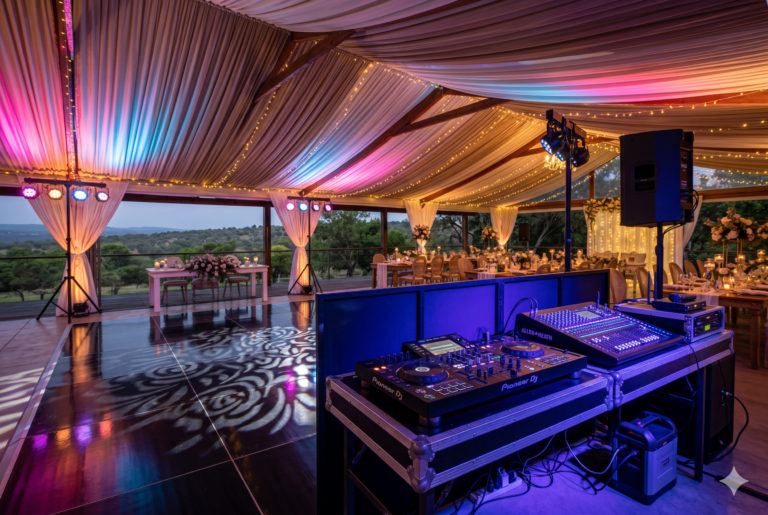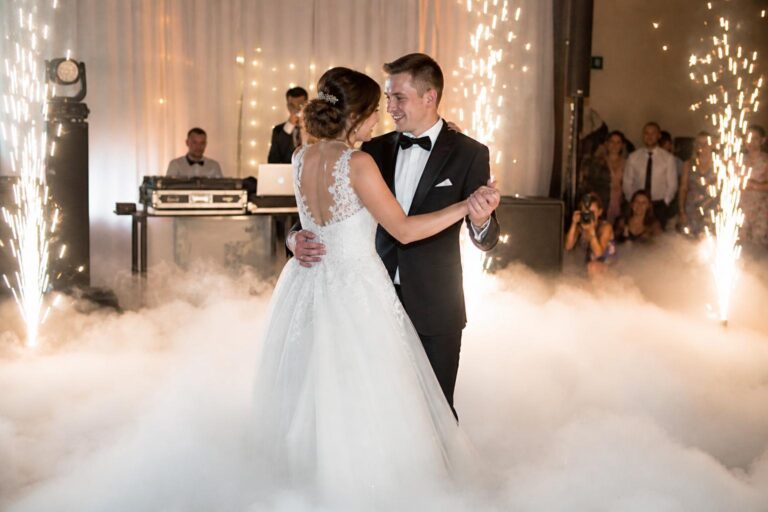
A Professional Guide to Stage Lighting and Sound Setup for Events
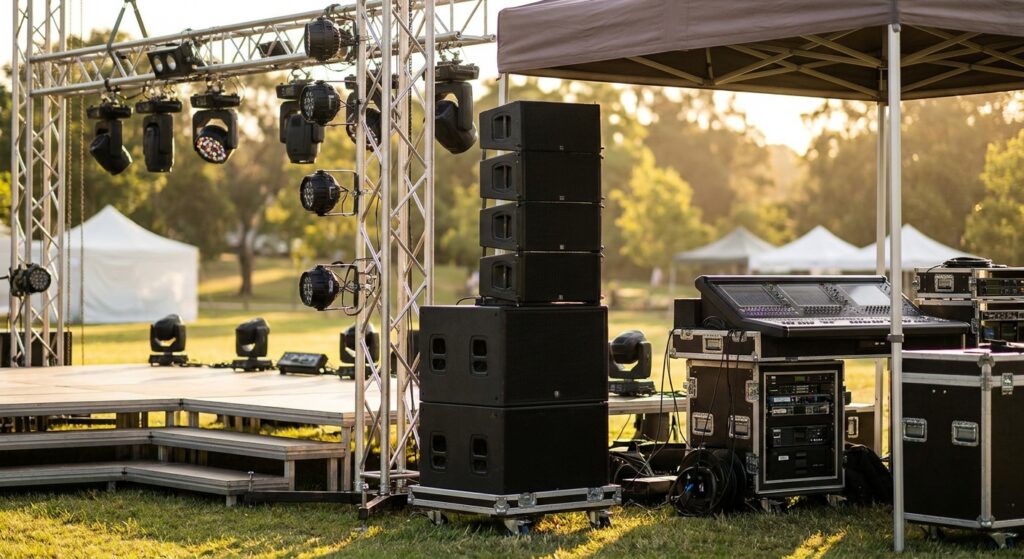
An effective event setup is achieved through a technical assessment of the venue’s power and acoustics, followed by the deployment of certified equipment. The goal is to ensure flawless performance, guest safety, and compliance with venue regulations. This preventative approach stops technical failures before they can disrupt your event.
Identifying an Unprofessional Setup
A poor setup often reveals itself through visible and audible faults. These issues not only detract from the event’s atmosphere but can also present genuine safety hazards to guests and performers. Recognising these signs early is key to protecting your event’s success.
Pay close attention to these common warning signs of an amateur installation:
- Visible, untidy cabling creating trip hazards across walkways.
- Audible buzzing or humming from speakers when no audio is playing.
- Flickering stage lights or inconsistent lighting levels during a performance.
- Poor sound coverage with noticeable ‘dead spots’ where audio is faint or unclear.
The Root Cause of Technical Failures
Most setup failures stem from a lack of pre-event planning and risk assessment. An improper power distribution plan is a primary cause, especially in South Africa where grid stability can be unpredictable. Overloading a single circuit or using incorrect, uncertified cabling can lead to equipment damage or total failure mid-event.
Power Management and Load-Shedding Compliance
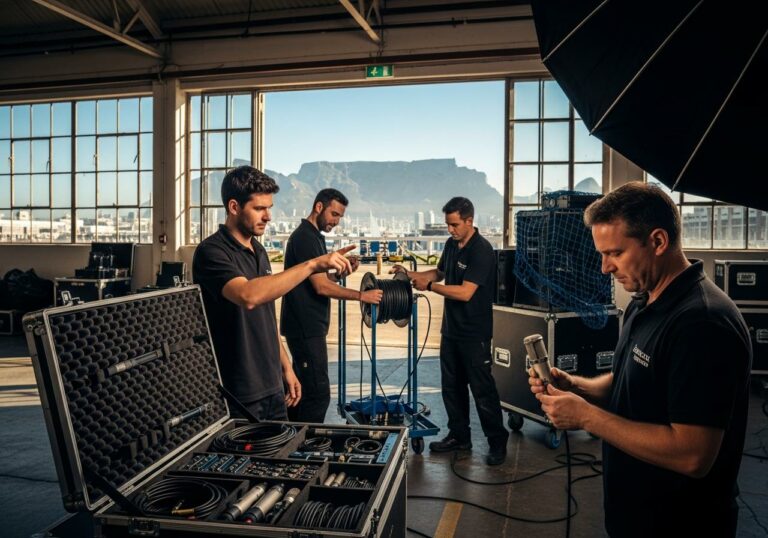
Our technicians perform a full power assessment of the venue before any equipment is brought on site. This involves mapping circuits to prevent overloads and specifying backup power solutions, like generators with automatic switch-overs. This preparation ensures your event continues without interruption during load-shedding, which is a non-negotiable part of our planning process.
Professional Solutions for Flawless Events
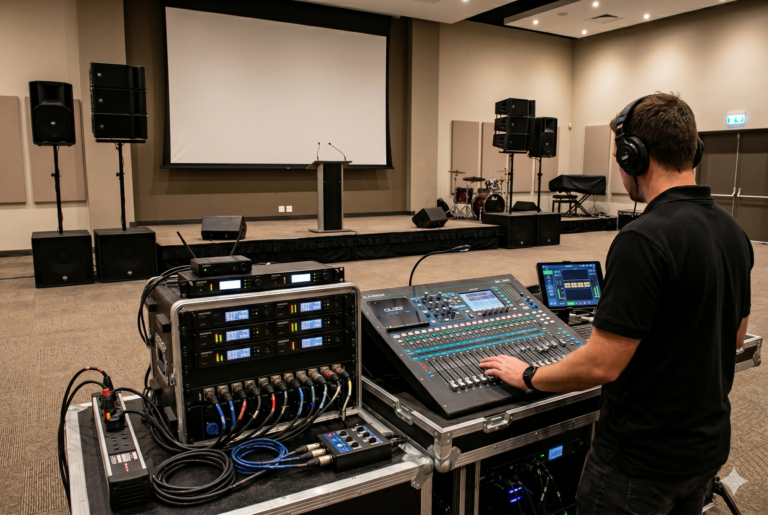
A professional setup is built on a foundation of detailed technical planning. Our process involves creating customised lighting plots and sound maps based on your venue’s specific dimensions and acoustic properties. This ensures every guest has a consistent and high-quality experience, regardless of where they are situated.
Our certified process includes several key stages for structural integrity and safety:
- A thorough venue site inspection to assess power availability, rigging points, and acoustics.
- Calculation of the total power draw for all equipment to ensure safe distribution.
- Using industry-standard rigging and safety cables for all suspended lighting and speakers.
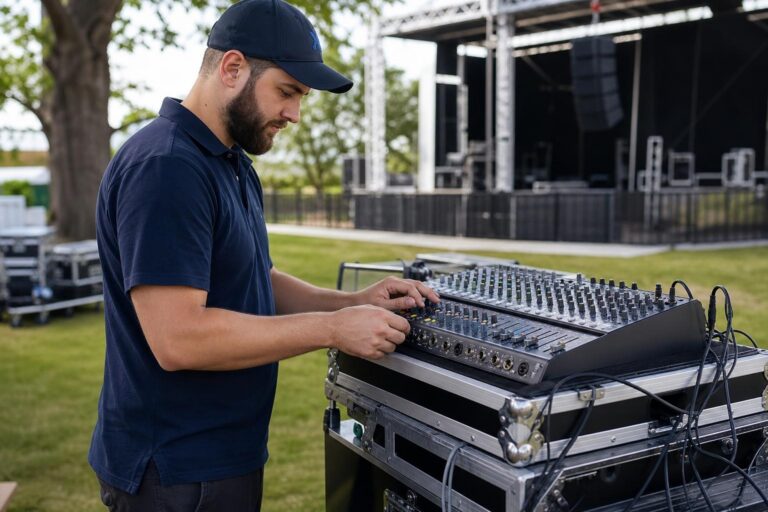
- Conducting a full sound and lighting check with you well before guests are scheduled to arrive.
Book a Consultation with Sonic event audio
Sonic Event Audio ensures our teams are equipped with certified, regularly maintained equipment. We specialise in preventative planning to guarantee your event runs smoothly and safely, meeting all venue standards. Attempting to cut costs with unprofessional setups often results in equipment failure or safety risks that can damage an event’s reputation. Get a quote using the button below.
FAQs
How far in advance should I book my event audio and lighting?
We recommend booking at least 4 to 6 weeks in advance, particularly for larger events. This allows our team sufficient time for a proper site assessment, detailed technical planning, and equipment allocation to ensure a flawless execution.
What happens if there is load-shedding during my event?
This is a core part of our fault-finding and planning process. We assess the venue’s backup power and, if inadequate, specify and supply correctly sized generators with uninterruptible power supplies (UPS) for sensitive electronics. This guarantees a seamless transition with no disruption to your event’s sound or lighting.
Is your equipment safe for all types of venues?
Yes. All our equipment is regularly tested for electrical safety, and our rigging is installed by certified technicians according to strict safety standards. We ensure all cabling is secured and managed properly to eliminate trip hazards, maintaining the safety and structural integrity of the venue.