What Is the Difference Between a PA System, a DJ Sound System, and a Conference Sound Package?
The difference between a PA system, a DJ sound system, and a conference sound package comes down to acoustic tuning, frequency range, and operational purpose. A standard PA system prioritises mid-range vocal clarity to push announcements across a crowd; a DJ sound system focuses on high sound pressure levels and deep sub-bass frequencies for music playback; and a conference sound package relies on multi-microphone management, digital signal processing, and distributed speaker coverage so every delegate hears speech evenly without feedback or strain. Selecting the wrong option leads to muffled presentations, blown speakers, or dance floors that lack punch.
Public Address Systems for Clear Vocal Projection
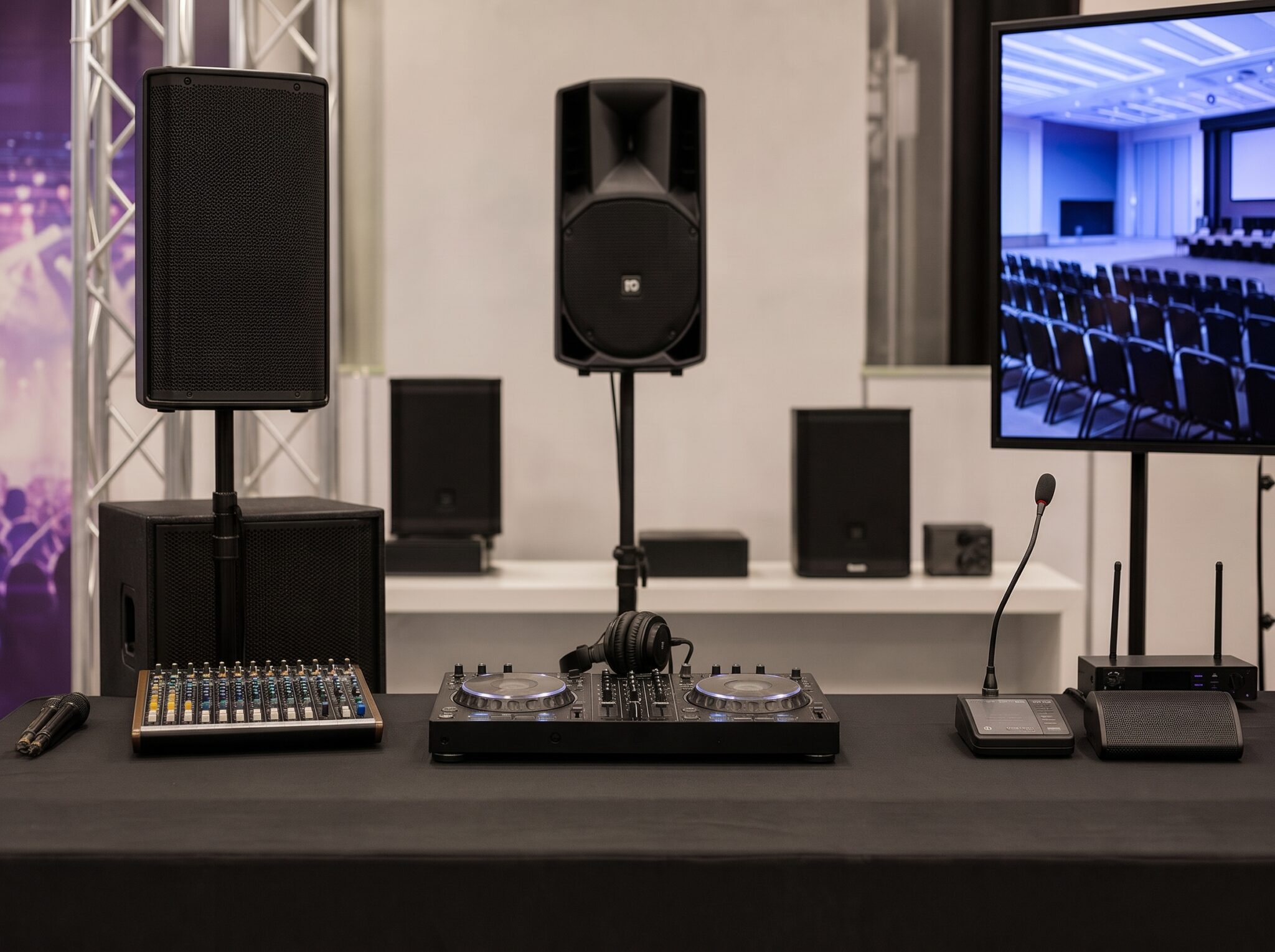
A public address (PA) system is designed primarily to amplify the human voice and basic background audio over a targeted area. These setups feature point-source full-range speakers mounted on stands, a compact analogue or digital mixing desk, and one or two handheld vocal microphones. Because speech sits predominantly between 250 Hz and 4 kHz, standard PA speakers are tuned to make spoken words sharp and intelligible rather than producing deep chest-thumping bass. For small gatherings or community events, exploring professional audio hire options ensures you match speaker wattage directly to venue dimensions.
Standard PA systems serve distinct purposes across public gatherings:
- School sports fields and outdoor prize-giving ceremonies needing vocal clarity over distance
- Auction houses and community halls hosting announcements and simple acoustic sets
- Retail activations and product demonstrations requiring rapid assembly and straightforward operation
DJ Sound Systems Engineered for Power and Bass Response
A DJ sound system prioritises continuous high output and wide frequency extension, specifically in the sub-bass territory below 80 Hz. Music tracks require dedicated subwoofers paired with high-powered mid-top cabinets to produce physical sound energy without distorting the drivers. These setups also incorporate booth monitors so the performer hears the mix in real time without acoustic delay from the main front-of-house speakers.
Low-End Frequency Performance and Subwoofers
Unlike spoken word, electronic and modern party tracks demand substantial electrical headroom. In Cape Town venues, coastal air density and open-air layouts along the Atlantic Seaboard absorb low frequencies rapidly. A dedicated DJ setup counteracts this with 15-inch or 18-inch subwoofers powered by high-damping-factor amplifiers. This infrastructure ensures the kick drum and bassline remain tight and punchy throughout the event without overheating the amplifiers.
Conference Sound Packages for Multi-Speaker Precision
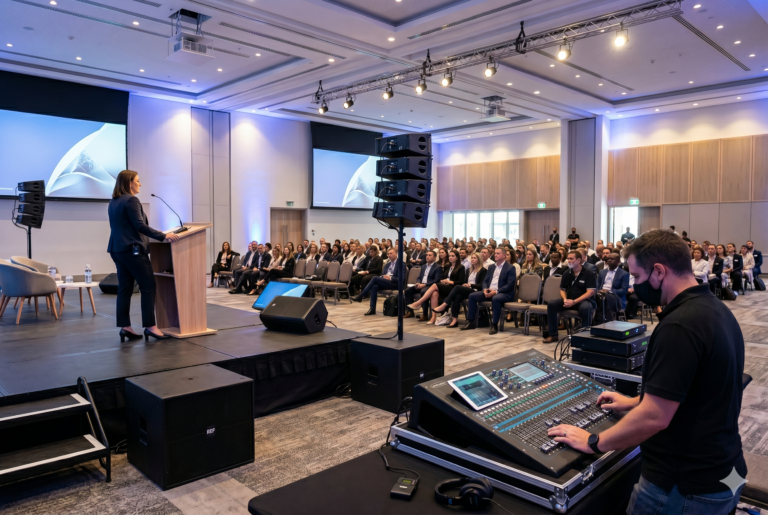
Conference sound packages solve an entirely different acoustic puzzle. Instead of pushing massive volume from two loud front boxes, corporate setups distribute sound evenly across a room using multiple smaller satellite speakers and delay lines. This approach prevents front-row guests from being blasted with excessive volume while ensuring delegates at the back of the auditorium hear every sentence at conversational levels.
A corporate sound setup relies on specialized processing hardware to run smoothly:
- Digital signal processors with automatic feedback suppression and acoustic echo cancellation
- Multiple wireless lapel, headset, and tabletop gooseneck microphones assigned to individual speakers
- Auxiliary audio feeds routed directly into video recording, live streaming, or hybrid Zoom platforms
- Direct input boxes to capture crystal-clear presentation audio and video playback from laptops
Comparing Components, Coverage, and Acoustic Requirements
Choosing between these audio packages requires understanding how room surfaces and ambient noise dictate your equipment list. Hard surfaces like the exposed brick and stone found in historic Cape Winelands venues cause sound waves to bounce erratically, turning high-output DJ setups into an echo chamber during speech. Conversely, bringing a vocal PA to a wedding reception leaves the evening dance floor flat and uninspiring.
Consider these physical and operational differences before booking your gear:
- Frequency balance: Conference units emphasise the vocal range; DJ rigs require dedicated sub-bass drivers; standard PAs sit in the middle
- Microphone handling: Conferences require multiple open microphones running simultaneously without squealing feedback; DJ sets generally need only a single host mic
- Power infrastructure: High-wattage DJ systems demand stable electrical circuits, whereas conference and standard vocal systems pull modest power that easily runs off solar batteries during load-shedding cycles
Sound Solutions With Sonic Event Audio
Getting your sound right means matching equipment capability to the exact physical space and schedule of your event. Whether handling an executive board meeting in the Foreshore, an outdoor festival facing the south-easter winds, or a private celebration requiring serious bass, selecting the correct audio package saves time and eliminates technical mishaps. Sonic Event Audio provides engineered sound configurations, professional system technicians, and silent inverter power backups designed to keep your programme running without interruption. Click the button below to arrange a full sound assessment and quotation.
FAQs
Can a DJ sound system be used for a corporate conference?
While a DJ system can amplify voice, it is far from ideal for conferences. DJ speakers project high volume from a single point, which can deafen front-row tables while leaving back rows straining to hear. DJ mixers also lack the feedback suppression and multiple microphone inputs required for panels and presentations.
Why can you not use a basic PA system for a dance party?
Standard vocal PA speakers lack the cabinet volume and low-frequency drivers needed to reproduce sub-bass. Pushing full-range vocal speakers to produce heavy electronic or hip-hop kick drums at party volumes will cause thermal clipping, distort the audio, and quickly burn out the voice coils.
How does Cape Town wind affect outdoor audio systems?
Strong winds disperse high frequencies and create substantial buffeting noise across microphone capsules. Outdoor systems require directional speaker clusters, heavy-duty stands with physical sandbag weights, and specialist foam or fur windshields on all vocal microphones to maintain speech clarity.
What backup power is needed to run these audio systems during load-shedding?
Standard conference packages and vocal PAs have modest power draws, making them easy to sustain using a pure sine wave inverter and lithium battery setup. High-powered DJ rigs featuring multiple active subwoofers demand substantial peak wattage, requiring either high-output battery systems or dedicated generators with regulated voltage outputs.