What Audio Equipment Do I Need for a Corporate Event?
A single audio failure can derail months of planning and undermine your brand. Poor sound is the fastest way to lose your audience’s attention and respect. As an event organiser, skimping on audio is a risk you simply cannot afford.
I’ve seen firsthand how professional audio transforms a good event into a great one. This guide is a strategic breakdown to help you match technology to your function.
Why Professional Audio is Non-Negotiable for Your Event
Before we get into the specifics of speakers and microphones, let’s establish why treating audio as an afterthought is a significant misstep.
- Engagement: If your audience can’t hear clearly, they can’t engage. Every muffled word from a speaker or crackle from a faulty connection is a reason for someone to check their phone.
- Brand Perception: The quality of your audio directly reflects the quality of your brand. Crystal-clear sound communicates professionalism, attention to detail, and a premium experience.
- Message Retention: The primary goal of most corporate events is communication. Effective speech reinforcement ensures your key messages are not just heard, but understood and remembered.
Investing in the right audio setup is not an expense; it’s an investment in the success of your event’s objectives.
Core Audio Components for Corporate Events
Every professional audio setup, from boardroom presentations to massive product launches, is built from the same fundamental blocks. Understanding these core components empowers you to have more effective conversations with your AV supplier and ensures a high-quality result.
Selecting the right microphones is the essential first step in ensuring the final clarity and impact of your message.
- Handheld Microphones: The professional standard for MCs and presenters, offering freedom of movement and reliability.
- Lapel (Lavalier) Microphones: Small, clip-on mics ideal for keynote speakers or panel discussions needing a hands-free setup.
- Lectern (Gooseneck) Microphones: Fixed podium mics that provide consistent audio for formal speeches and presentations.
Mixers: The Control Centre
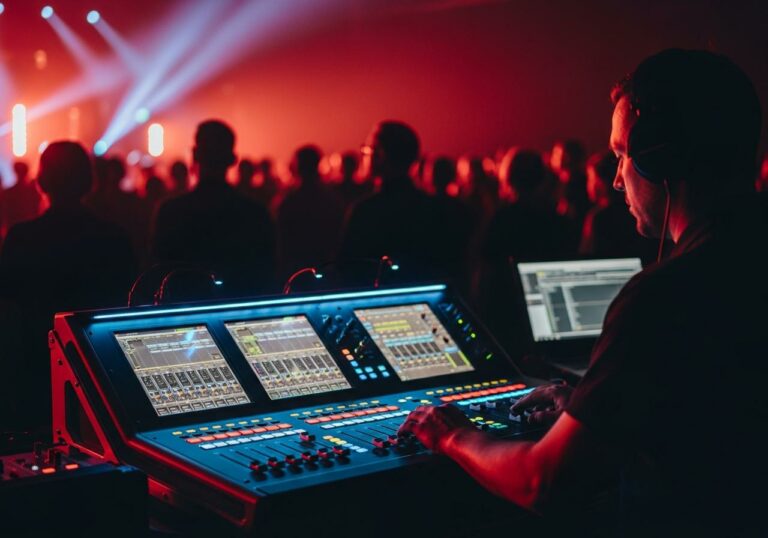
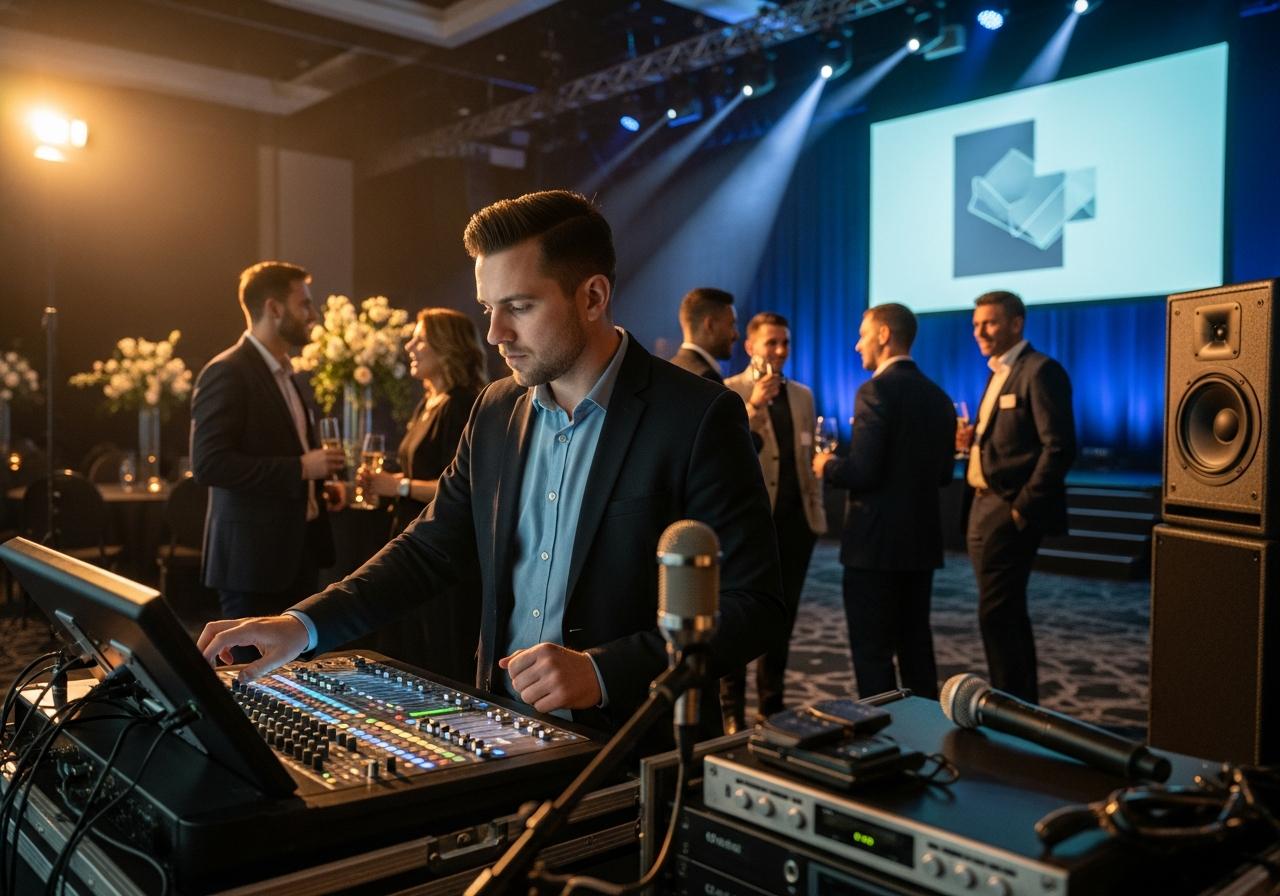
All audio signals from microphones and media players feed into the mixer, which serves as the system’s brain. A trained technician uses this “mixing desk” to balance levels, adjust tone, and eliminate feedback. While small events require only a compact analogue mixer, complex gala setups with live bands often need large-scale digital desks
Speakers: The Voice of Your Event
Speakers project the final, mixed sound to your audience. The biggest mistake is underestimating the number or quality needed to ensure even, comfortable coverage for every guest.
- Point Source Speakers: Stand-mounted units perfect for small to medium venues and breakout rooms.
- Subwoofers: Specialized for low-frequency bass, adding essential impact to brand launches and music.
- Line Array Systems: The professional standard for large venues, providing exceptionally controlled sound distribution and clarity over wide areas.
Matching the Audio Equipment to Your Specific Event Type
The “right” equipment is entirely dependent on your event’s format, venue, and goals. Here’s a practical breakdown for common South African corporate events.
The AGM or Conference: Clarity is Key
For corporate events where communication is the priority, your audio setup must focus on clarity and consistency across the entire venue.
- Objective: Achieve perfect speech intelligibility so every word is heard clearly.
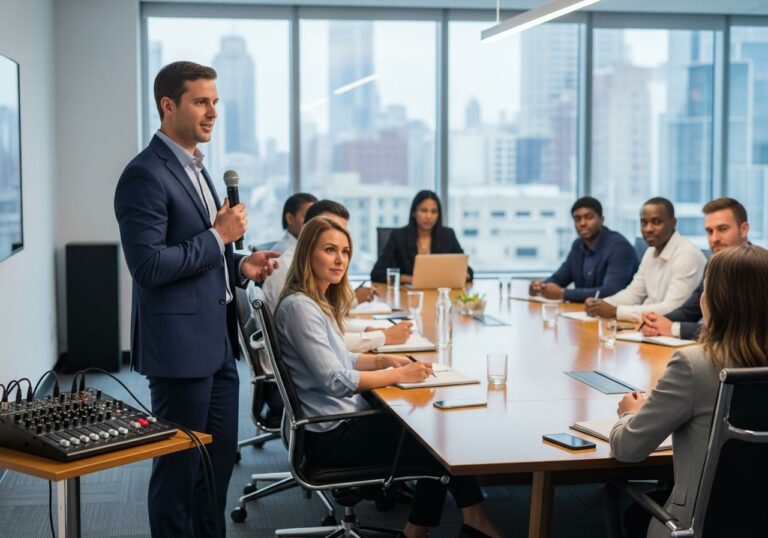
- Microphone Setup: Use lapel mics for speakers, handheld wireless mics for Q&A, and a gooseneck mic for the lectern.
- Control: Utilize a digital mixer for precise volume management and automatic feedback suppression.
- Speaker Placement: Implement a distributed audio system with multiple speakers for even, comfortable sound levels throughout the room.
The High-Energy Brand Launch: Making an Impact
To ensure your brand launch or gala dinner leaves a lasting impression, your audio configuration must balance high-energy impact with sophisticated atmospheric control.
- Brand Launches: Use wireless handheld mics and powerful speakers with subwoofers. Large venues require line array systems for concert-level energy and clarity.
- Gala Dinners: Focus on high-quality MC mics and discrete speakers for balanced sound that doesn’t overpower conversation.
- Expert Transitions: A skilled technician is vital for managing real-time audio shifts between background music, award stings, and speeches.
- The Goal: Tailored setups that ensure your music is felt and every word is heard, regardless of the atmosphere.
The Sonic Event Audio Difference: Why a Partner Matters More Than a Parts List
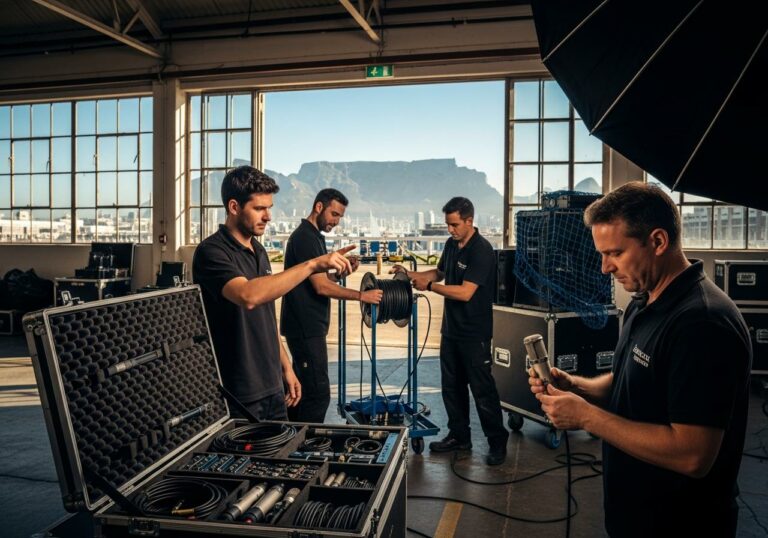
You can hire equipment anywhere, but flawless execution requires a dedicated partner. At Sonic Event Audio, we act as your technical production partner to ensure success. We provide more than just gear; we provide the expertise to manage your event.
We conduct site inspections and provide robust backups to navigate load shedding. Our highly trained technicians actively manage your sound for a perfect experience.
Your Next Step to Flawless Event Audio
Planning your next corporate event? The next step is a simple conversation. Let’s move beyond the parts list and talk about your vision. We will help you design a sound solution that supports your goals and delivers a clear, professional, and impactful experience for every one of your guests.
Contact the team at Sonic Event Audio today for a no-obligation consultation.
FAQs
What is the best microphone for a corporate MC?
For an experienced MC, a professional-grade wireless handheld microphone like a Shure QLXD with an SM58 capsule is the industry standard. It offers fantastic vocal clarity, reliability, and allows the MC to interact with the audience and control the room’s energy effectively.
Do I really need a dedicated sound technician for my event?
For any event with more than one microphone or multiple audio sources (e.g., a laptop for presentations and a music source), a dedicated technician is essential. They manage levels, prevent feedback, cue music, and troubleshoot any issues in real-time. Their presence is the insurance policy for your event’s audio success.
How much does it cost to hire audio equipment in South Africa?
Costs vary widely based on the scale of the event. A basic PA system for a small presentation might start from R2,500. A full audio setup for a conference for 200 people could range from R8,000 to R20,000, while a large gala dinner with a band could be R30,000 or more. The price reflects the quantity, quality of equipment, and the expertise of the technicians required.
Can we just play music from a laptop?
Yes, but it must be connected to the professional sound system correctly via a DI (Direct Injection) box. This converts the signal to the correct level and impedance, preventing the humming, buzzing, and distortion that often occurs when a laptop is plugged directly into a mixer.
Our venue has an in-house AV system. Is that good enough?
Sometimes, but it’s important to verify. In-house systems can be outdated, poorly maintained, or unsuited for your specific needs (e.g., designed for background music, not clear speeches). It is always best to have your professional audio supplier assess the in-house system or recommend bringing in their own guaranteed equipment.